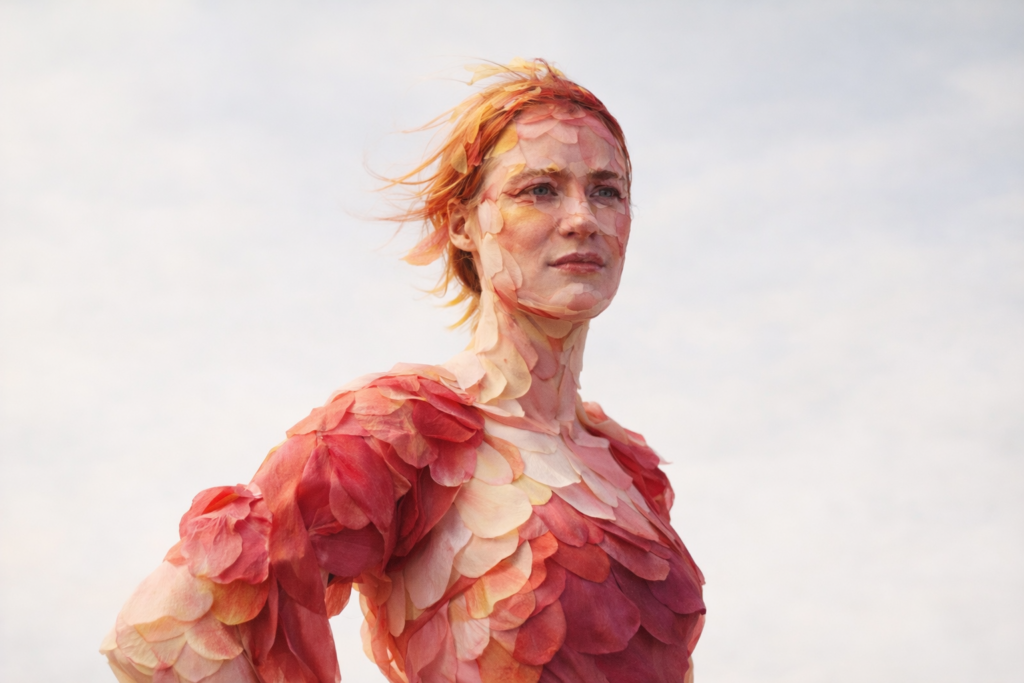
A few weeks ago, I finally watched the HBO/Max series Station Eleven, which is based on the novel of the same name by Emily St. John Mandel. I first read the book ten years ago, just after it was published, and it has quickly become one of my favorite fiction novels.
The story follows an assembly of characters in the wake of a global pandemic that spares only one in every thousand people. Mandel begins the novel in the middle of the virus outbreak; we watch as characters realize with disbelief the scale and ruthless nature of the Georgian flu that besets the world–and soon claims many in the novel’s opening pages.
Then the novel leaps fifteen years into the future. Civilization as we know it has collapsed. There’s no more electricity, no more law or order, no more government–no more nations, anywhere. There are only the scattered survivors who adapted to this new way, mostly by living like those from pre-industrial revolution history.
The story, however, isn’t about the apocalypse or gratuitous ruin porn. Surprisingly, it keeps one narrative foot firmly planted in the years before the pandemic, visiting characters we’ve come to know in the post-pandemic times before the outbreak and illuminating their backstories.
At the center of the novel is Kirsten, a child actress performing in King Lear when the outbreak happens. A young woman in the “after” times, she has fallen in with a troupe called The Traveling Symphony. The Symphony travels an annual circuit around the Great Lakes, stopping their horse-pulled wagons in overgrown towns to perform Shakespeare, a writer who shared an intimate familiarity with plagues.
This assembly of artists offers Kirsten safety. It’s still not quite safe to just be anywhere, and raiders and bad guys still haunt about, and soon we learn that Kirsten came of age while facing tests of will and resiliency. As most food, gadgetry, and other helpful items from the before times that might be useful were consumed or rendered useless, survival is a regular struggle.
Even so, Kirsten and the Symphony have adopted a motto: “Survival is insufficient.” Borrowed from an actual episode of Star Trek: Voyager, the line captures the spirit they bear in the face of their sustained existential threat. It is the philosophy powering their decision to bring art to whoever decides to show up every night in the abandoned parking lots of old Wal-Marts.
Mandel’s novel had the privilege of appearing years before the Covid-19 pandemic in 2020, but the series adaptation was produced in the middle of it and released at the end of 2021, just as the Omicron variant raced around the globe.*
I say the book had the privilege of being published before we knew what a pandemic really was–in our “before” times, we could only imagine what life would be like living with a strange and deadly virus. There’s never been any shortage of sci-fi offerings about what might happen, but in truth, none of us knew what would happen.
And then we did. The television version of Station Eleven dropped as we accepted the realities of a post-Covid world. Watching the series’ 10 episodes in 2025, a few of the ideas felt a little contrived, if not naive, given what we ultimately experienced. And I was reminded of the eery coincidences, including one storyline where a plane bearing sick passengers isn’t allowed to unload at an airport. Visions of cruise ships stranded offshore and full of Covid-sick folks sprang to mind.
At the heart of Station Eleven is the indomitable spirit of Kirsten and the Symphony. Even as they stare down danger, they are driven to make art and share it with others. It’s a remarkable thesis–and one that some have criticized Mandel’s story over in the “after” times as being among the naive assumptions. There were not roving bands of actors doing Shakespeare in the Park in our actual pandemic, they noted.
I think that misses the point, though, because nearly everyone I know discovered or rediscovered some version of a hobby when the world shut down. How many first-time bird-watchers filled your Instagram feed? How many of your friends became overnight master bakers, stacking sourdough loaves on their counters? How many threatened to use every skein of yarn ever produced to feed their newfound crocheting habit? Did your neighbor hammer together a coop in his back yard and learn how to raise chickens? Remember the spliced together virtual choirs of people singing? Or when they did SNL on zoom?
Maybe it was because we suddenly had the time, or maybe it was boredom, or maybe it was simply the thing to do–but in the midst of the pandemic, the human spirit did not have to be told to go and create things.
There is something compulsory to creation. In good times, when creative nature is fed and watered and treated kindly, the urge to make things and share them comes quickly. What’s remarkable is how quickly the same need becomes in bad times. Creativity springs from danger and disaster just as quickly as it blossoms from nourished beds.
Think of how members of Congress spontaneously singing “God Bless America” on the Capitol steps the night of September 11 or Parisians singing “Ave Maria” while Notre Dame burned. Edvard Munch painted Self Portrait with the Spanish Flu. Martin Luther King, Jr. wrote from a Birmingham jail cell. There are thousands more examples. Creative art can soothe or document or protest.
Where does this impulse come from? What’s running through our veins that pushes us to make? Pushes us to find community through it all?
Perhaps it can be found in the lineage we have with our Creator.
Human beings are just art projects after all, just a sweeping together of dust and a rib or two mended in. Is it simply anthropomorphism to suggest that God sat in the great vacuum of space and felt compelled to create the heavens and the earth because it was fun and there was nothing else to do? In the early iterations of civil existence, it seems He took a heavy hand in staging the play, not to mention wiping most of it out from time to time with floods and fire and locusts and… well, with plagues. Mankind’s regular insubordination was dealt with again and again.
Until, of course, the Messiah is born.
In an astonishing act of creation, God sends forth a son, born of a virgin mother, cradled in a manger, prophesied for centuries by the voices of ghosts. And this new creation saves mankind by springing it from its enslavement to the world, granting us eternal life and asking only our faith and obedient belief in return.
Naturally, Jesus was a carpenter.
The borrowed line in Station Eleven about survival being insufficient isn’t just a throwaway. It pays homage to the fabric of our being. We are pushed to create because there is so much satisfaction in the act of creating, because without creating we cannot live properly.
And there is joy, especially when we create things to share. And that, dear reader, is how we arrive on this third Sunday of Advent, where we dwell upon the joy brought to our world in the form of Christ incarnate. The God that inhabits us through the Holy Spirit creates within us new and unending life. The joy you may feel when you craft something out of simple ingredients is the same joy our Creator felt. And feels.
Go and create something, my friend. Don’t forget to share it.
*Remember the Omicron wave? I went back and read about it. First documented in mid-November in Africa, it spread globally within weeks and became the predominant strain in the United States by Christmas. It’s astonishing to see how quickly our modern world can spread a virus, and that might the part that makes the entire premise of Station Eleven so unsettling.
Leave a Reply